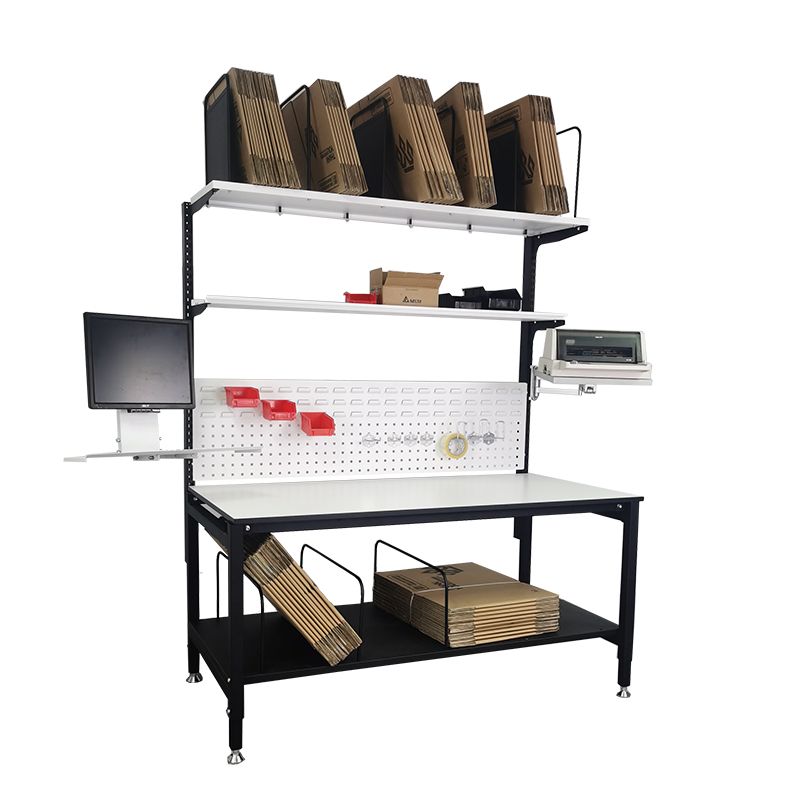
Article Summary:
A well-configured packing workbench can dramatically improve efficiency, reduce errors, and enhance ergonomics in warehouses. This article explores five common packing bench configurations and explains how each setup supports different packing needs.
1. Why Packing Bench Configuration Matters
Packing benches are much more than flat surfaces. In today’s fast-paced warehouses, they act as command centers for order fulfillment.
Moreover, a thoughtfully configured bench reduces wasted motion, improves throughput, and creates a more organized workspace. On the contrary, poorly structured setups often result in confusion and delays.
That’s why understanding different layout options is essential when designing your workflow.
2. The 5 Most Popular Packing Bench Setups
Each business has unique requirements. Fortunately, there are multiple packing bench configurations that cater to various industries and workflows.
Let’s take a closer look at the five most common options and how they function.
🔧 1. Basic Bench with Under-Table Shelving
Overview:
This setup features a sturdy tabletop with open shelving underneath for storing essential supplies.
When to Use:
It’s a great starting point for small-scale operations or e-commerce startups that require low-cost, practical solutions.
Key Advantages:
- Easy access to packing tools
- Keeps materials close at hand
- Affordable and space-efficient
📦 2. Multi-Level Bench with Overhead Shelves
Overview:
This configuration includes one or more upper shelves above the main tabletop, offering vertical storage.
When to Use:
It works especially well in busy warehouses where cartons and materials need to be within reach but off the main surface.
Key Advantages:
- Uses vertical space effectively
- Keeps working surface clear
- Improves workflow speed
🖨 3. Tech-Integrated Bench with Printer & Monitor Mounts
Overview:
This station integrates devices like label printers, barcode scanners, and screens directly onto the frame.
When to Use:
Perfect for facilities that rely on real-time order tracking, scanning, and digital processing.
Key Advantages:
- Centralizes technology and tools
- Improves label printing speed
- Reduces errors in order handling
🗂 4. Modular Bench with Drawers and Bin Dividers
Overview:
Modular designs allow customization with drawers, trays, and dividers tailored to your inventory and process.
When to Use:
Recommended for operations with diverse SKUs or variable packing requirements.
Key Advantages:
- Supports more complex workflows
- Keeps stations neat and tidy
- Flexible for future adjustments
🧍 5. Ergonomic Bench with Adjustable Height
Overview:
Height-adjustable workbenches support standing and seated work, helping to reduce worker fatigue.
When to Use:
These benches are especially useful in high-volume packing zones or where heavy products are handled.
Key Advantages:
- Boosts worker comfort
- Reduces risk of injury
- Adapts to different users
3. How to Select the Best Configuration
Choosing the right layout depends on a few critical factors, such as:
- Order volume and size variation
- Space availability
- Equipment and tool integration needs
- Staff ergonomics and comfort
In addition, if your business is scaling or frequently changing products, a modular bench is likely the best long-term investment.
Conclusion: Invest in a Smart Workbench Layout
To sum up, the right packing bench setup will greatly influence your warehouse performance.
Whether you’re just starting out or optimizing a large-scale operation, selecting the appropriate configuration helps improve speed, accuracy, and worker well-being.
👉 Looking for custom packing benches?
Feel free to contact us — we design modular and ergonomic workstations for your exact needs.