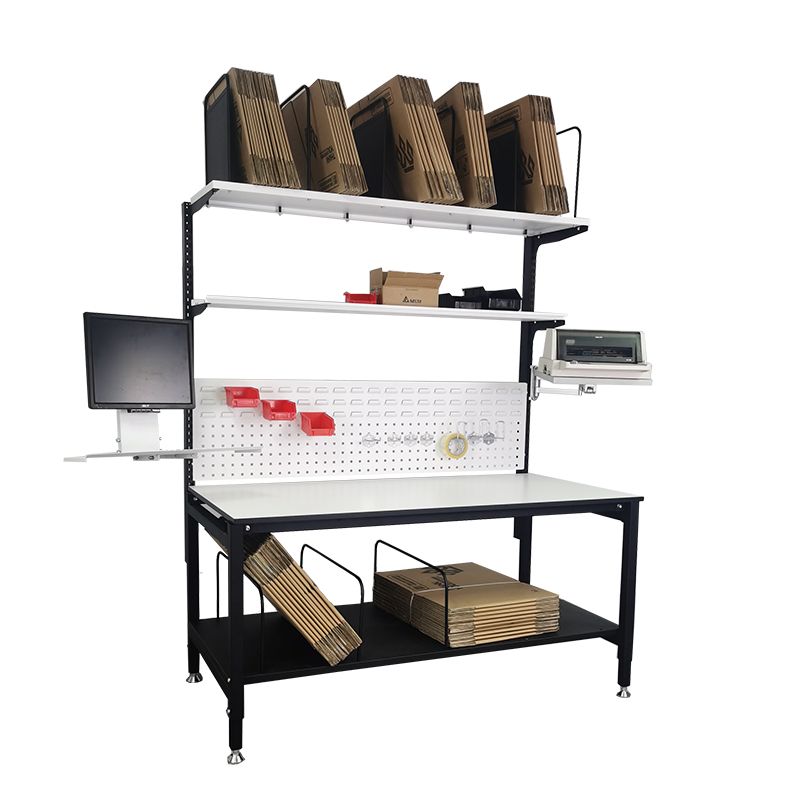
- How a Smart Packing Table Design Improves Warehouse Efficiency
Online shopping has become part of our daily lives. Even across great distances, consumers can purchase products from different countries and regions. Therefore, due to the multiple stages involved in transportation, ensuring reliable packaging is critical for merchants.
Why Manual Packaging Still Matters
In many fast-growing e-commerce regions, warehouses must handle tens of thousands of packages daily. While automated packaging lines are becoming more common, they cannot meet the needs of complex SKU variety.
Consequently, manual packaging remains essential. When properly supported, it can offer flexibility and speed. This is where a smartly designed packing table becomes crucial.
What Makes a Good Packing Table?
A packing table must solve key pain points during packaging, such as:
- Ergonomics
- Storage and classification
- Tool accessibility
- Flexible material handling
- Electronic integration
- Lighting and safety access
1. Ergonomic Design Reduces Fatigue
A good packing table should accommodate operators of different heights and working habits. In particular, features like adjustable height, interchangeable components, and customizable layouts allow users to work comfortably and safely.
As a result, ergonomic design enhances productivity and prevents repetitive stress injuries.
2. Space Optimization Increases Efficiency
Efficient use of space is vital, especially when packaging different types of products.
- For example, the table must store various carton sizes, flexible packaging rolls, and sealing tapes in a well-organized manner.
- Additionally, space must be reserved for printers, scanners, and cutting tools.
This way, operators save time and reduce the chance of errors.
3. Materials and Tools Should Be Easy to Access
Different packaging materials come in different sizes and require separation.
Therefore, a packing station must clearly categorize and store each item:
- Cartons by size
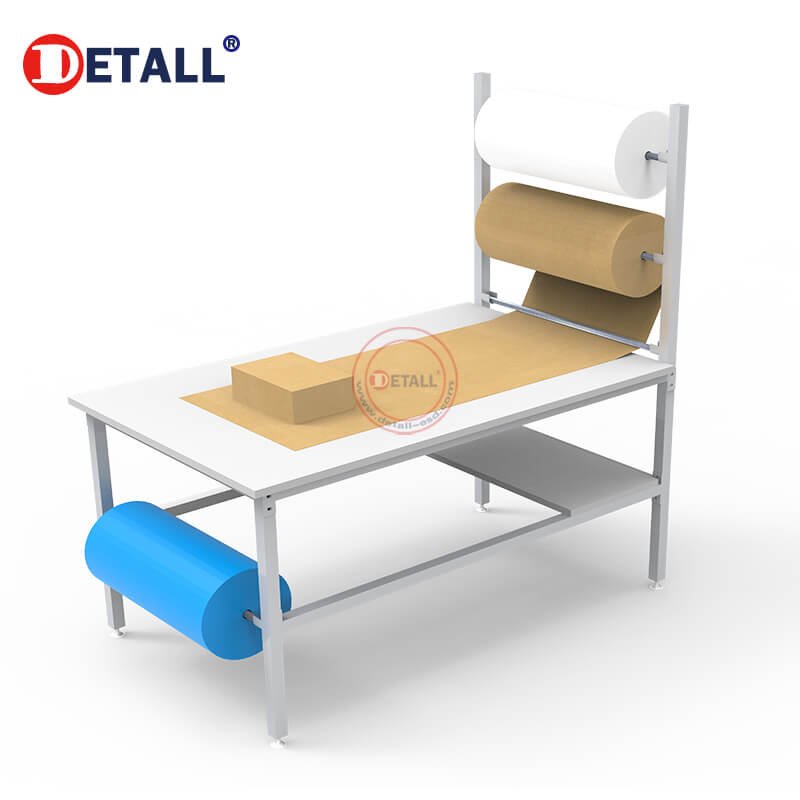
- Flexible materials on rollers
- Tools in designated drawers
In doing so, packing becomes more efficient and less cluttered.
4. Integrated Devices Enhance Digital Workflow
In many modern warehouses, traceability and automation are essential.
That’s why packing tables must include:
- Label printers and scanners
- Touchscreen computers or tablets
- Cable routing and charging solutions
Thus, digital operations become seamless and reduce human errors.
5. Adaptable Structures Support Future Growth
Product lines and workflow demands are always evolving. To keep up, packing tables should be modular and expandable.
For instance, by allowing quick attachment or removal of components, the table can adapt without costly replacements.
6. All-in-One Functionality Saves Time and Space
Multifunctional tables are not just a trend—they’re a necessity.
Instead of having separate areas for cutting, taping, and scanning, a well-integrated workbench should offer:
- Centralized tool access
- Built-in lighting and power
- Flexibility for future upgrades
Therefore, users save both physical space and operational time.
Real-World Examples of Effective Packing Tables
Logistics Warehouse Workbench
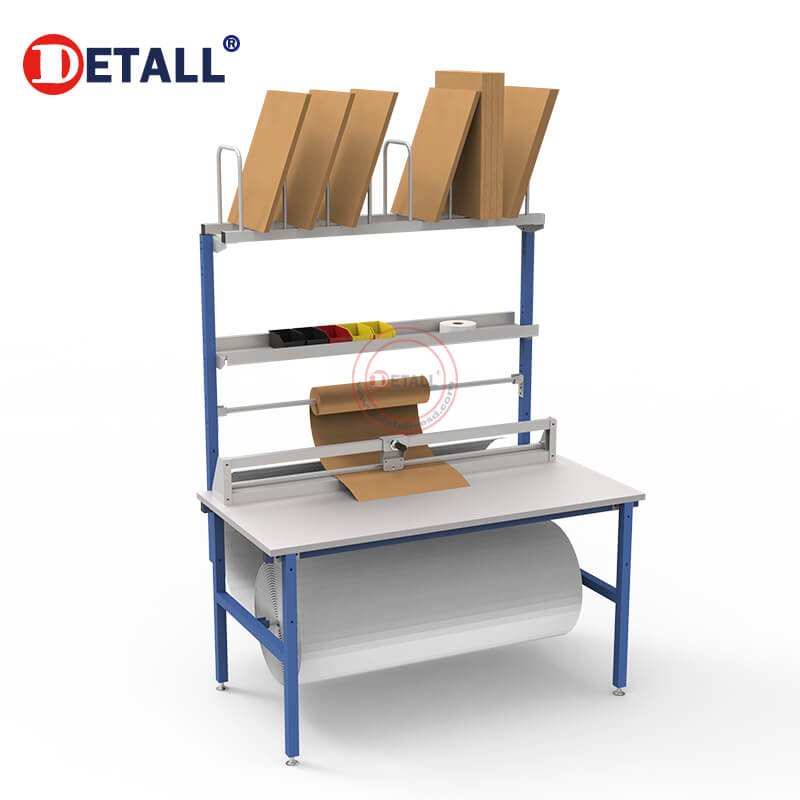
Side Rod Packing Station
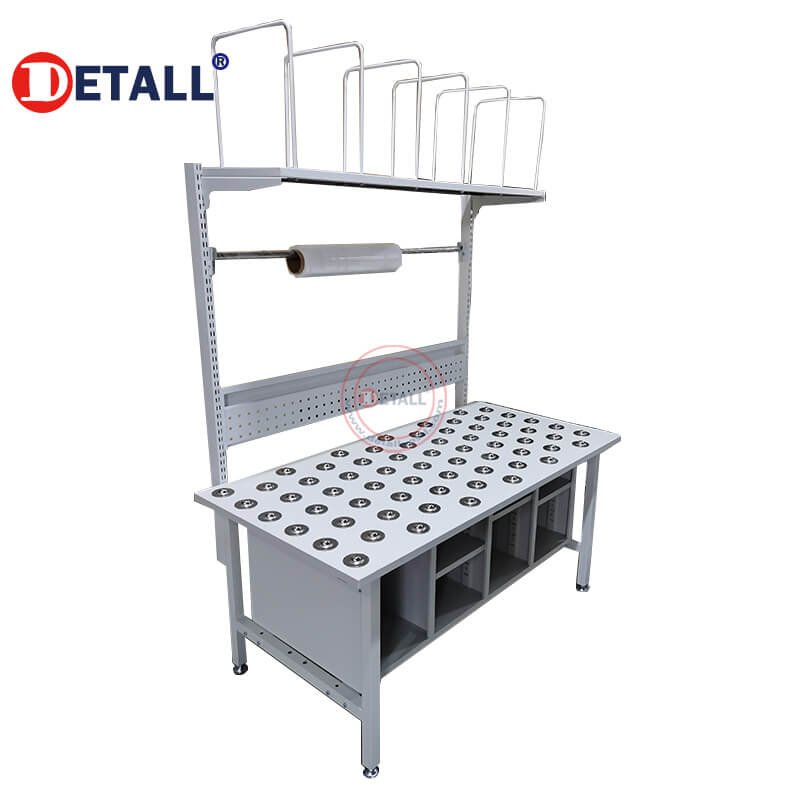
Universal Wheel Desktop Workbench
Final Thoughts
Packing tables are more than just furniture—they are productivity tools. With thoughtful design and multi-functional integration, they streamline the packaging process, reduce costs, and adapt to evolving warehouse needs.
In conclusion, investing in a smart packing table is a step toward more efficient and scalable warehouse operations.